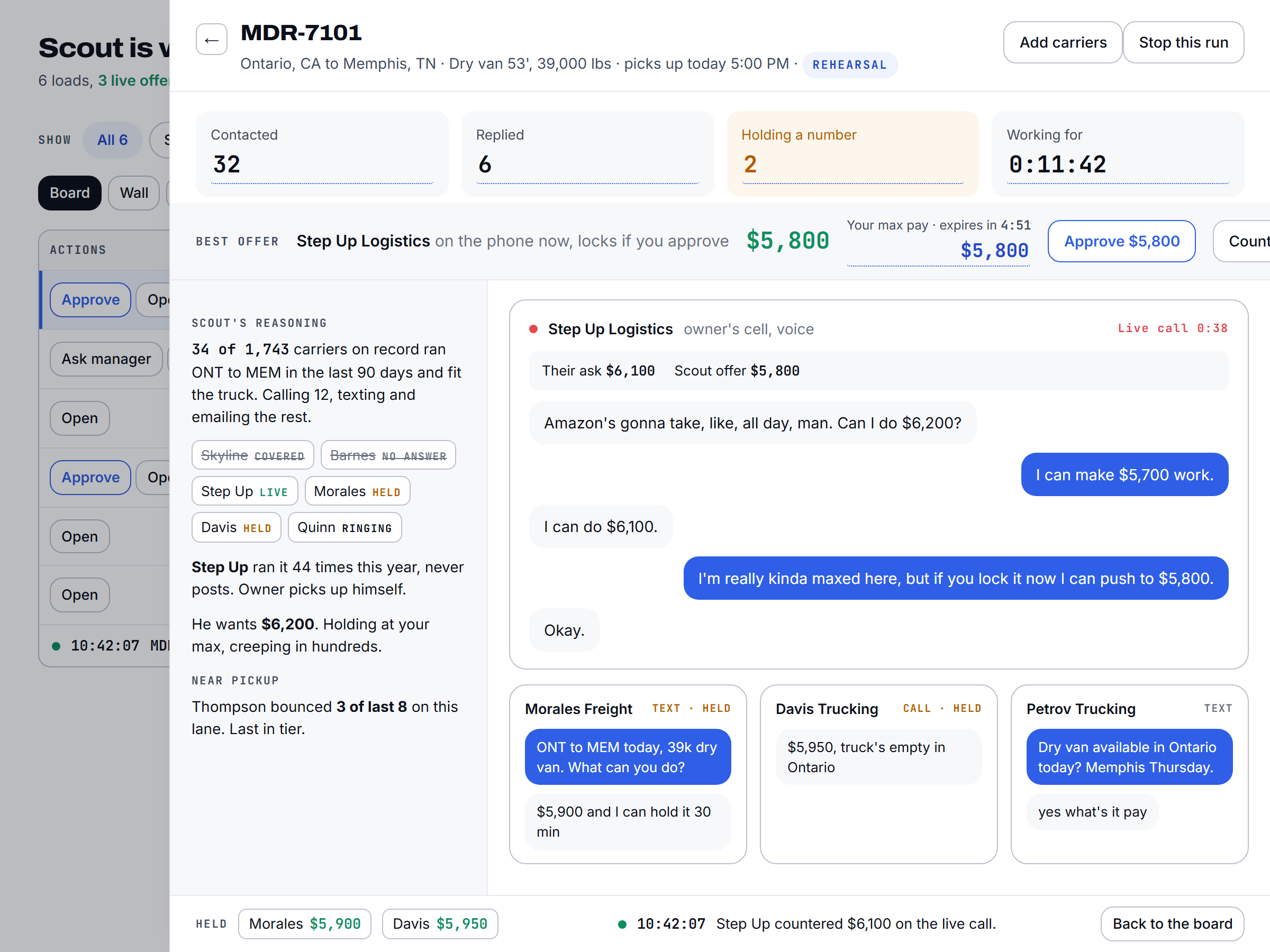
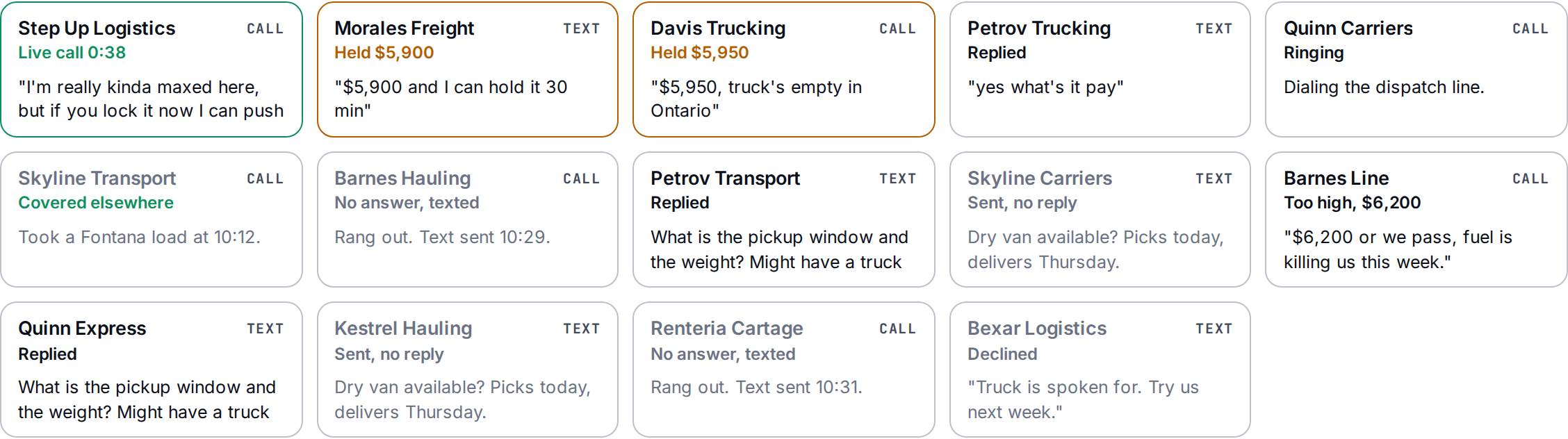
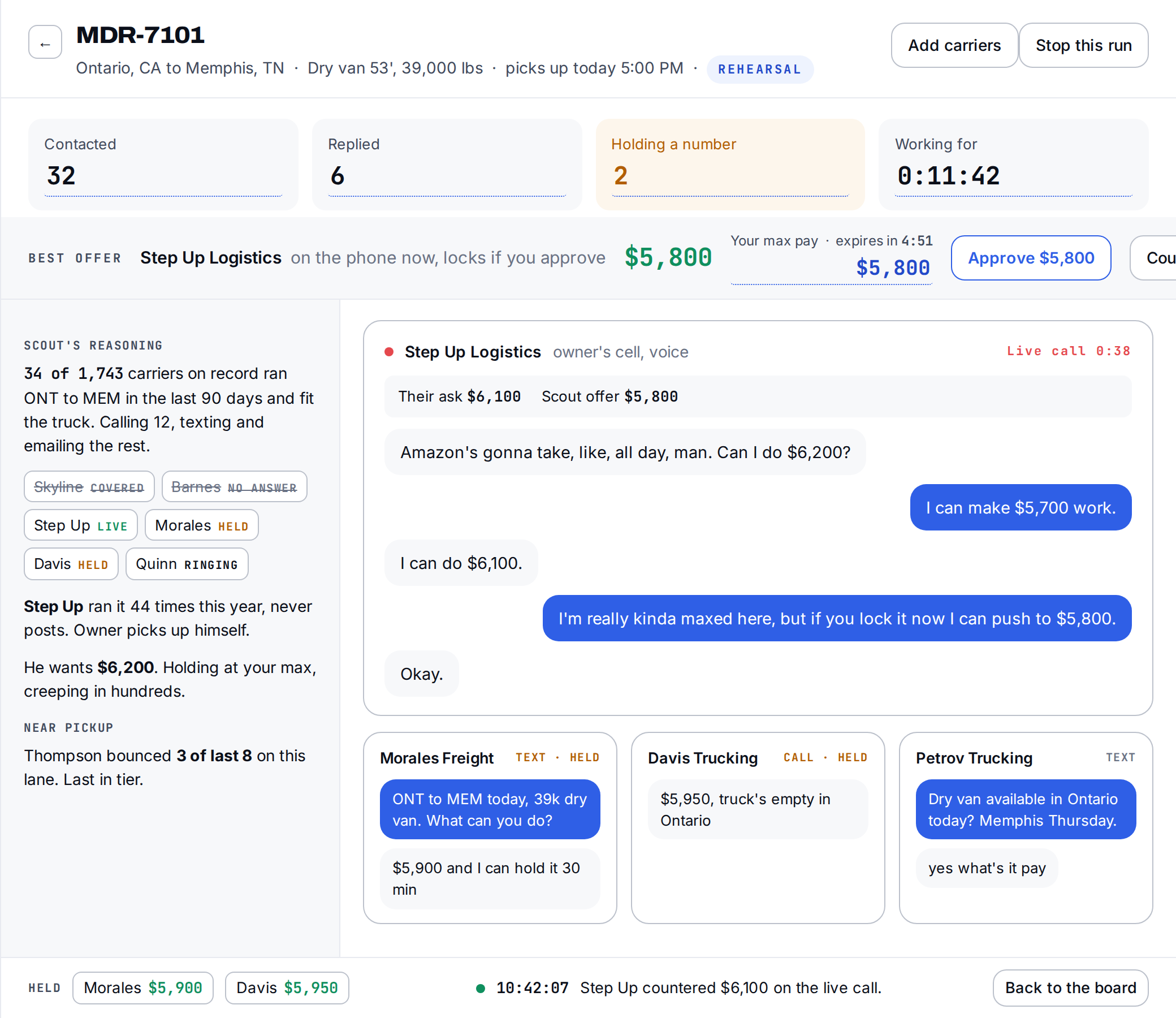
Tell Scout to cover the load. It texts, calls, and emails every carrier that fits, in the same minute, across every open load on the board. It negotiates on the phone, holds the line on your max pay, and brings you the truck to approve. Your carrier reps spend their time on the carriers worth a relationship.
On the top lane one rep places calls one after another, each one waiting for the last to end. On the bottom lane text, voice and email go to many carriers in the same minute. Replies land, the threads nobody answers close themselves, and one truck comes back for a person to approve.
Your best carrier rep can make one call at a time. Scout doesn't have that limit. Text, voice, and email go out together to the carriers that fit the load, and the next wave goes when the first one goes quiet. The load gets worked the whole time, not when somebody frees up. And a carrier doesn't get ten texts. One touch carries every load you have that fits his truck.
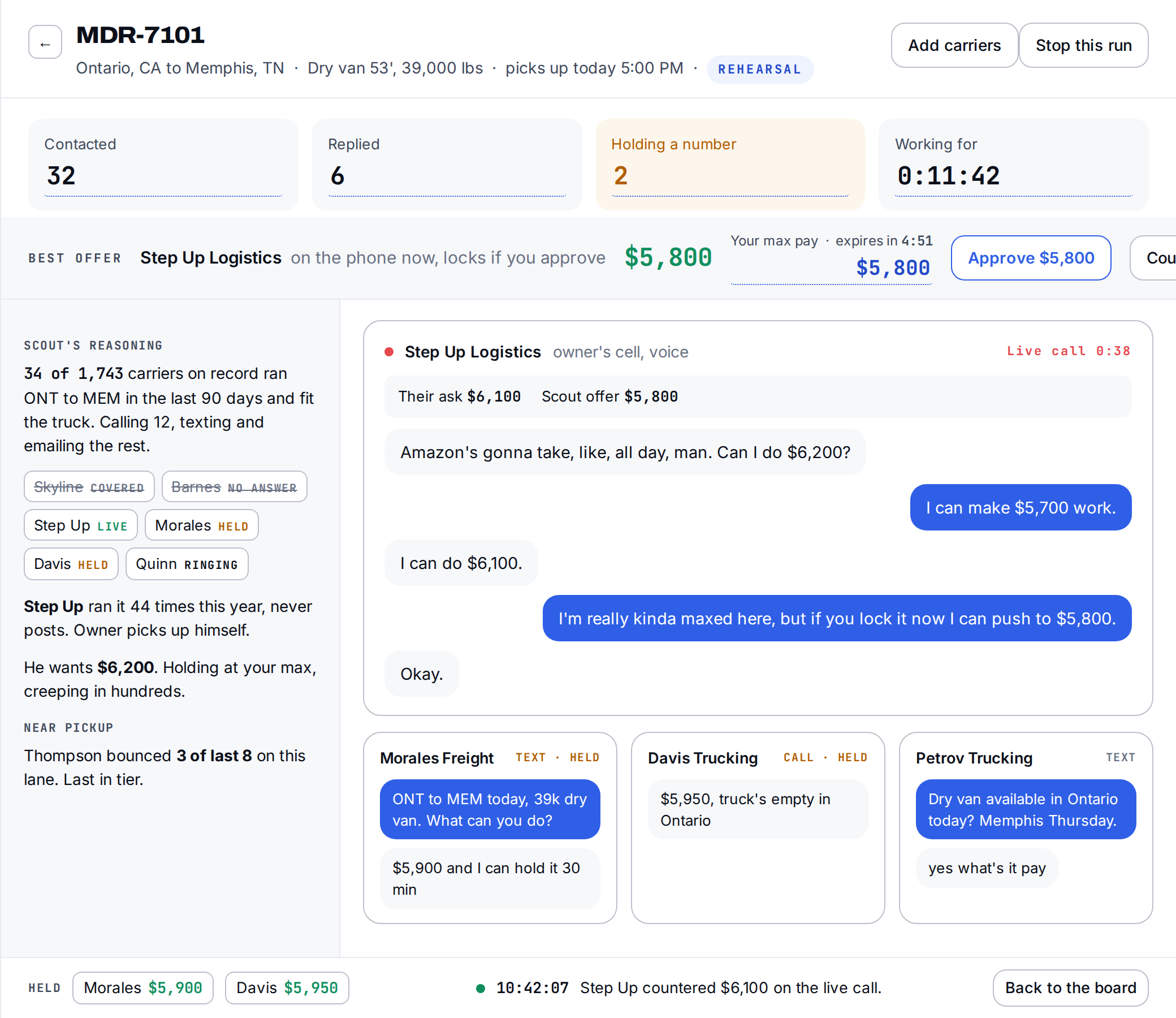
Scout calls carriers and carriers call Scout. A carrier calling in on your post gets an answer, a number, and a real conversation, not a voicemail. It says it's AI. It never gives up your ceiling, and it never names your customer. And before a load word is spoken, the caller's number is checked against the MC. If it doesn't match, he gets a call back on the number of record, not a load detail. No driver, no rate con. For everybody.
You set what the load can pay. Scout works the rate on a live call inside that number and defends it. A carrier who wants more than your max doesn't get silence. It goes to a manager as a decision: raise it or pass.
See the autonomy dial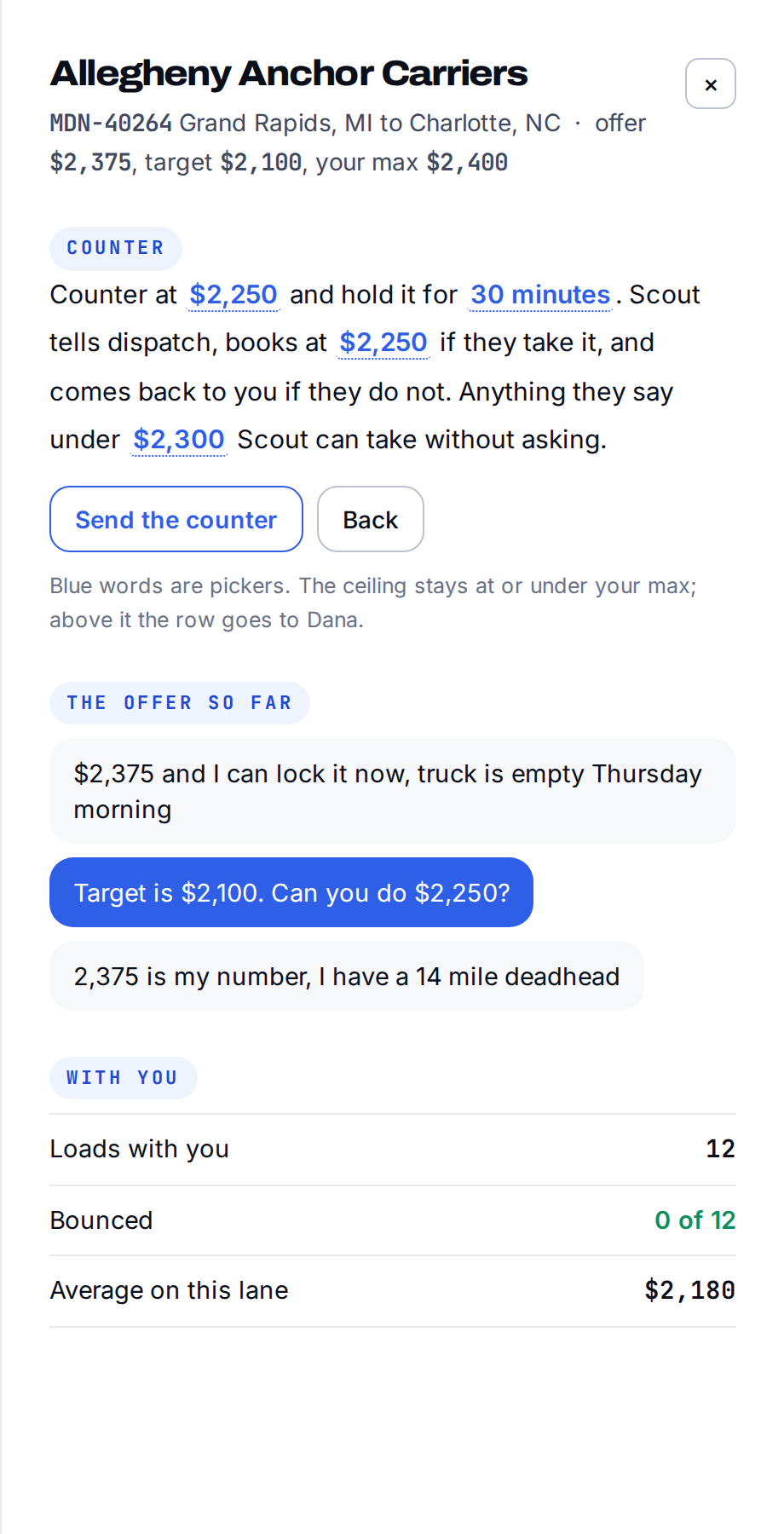
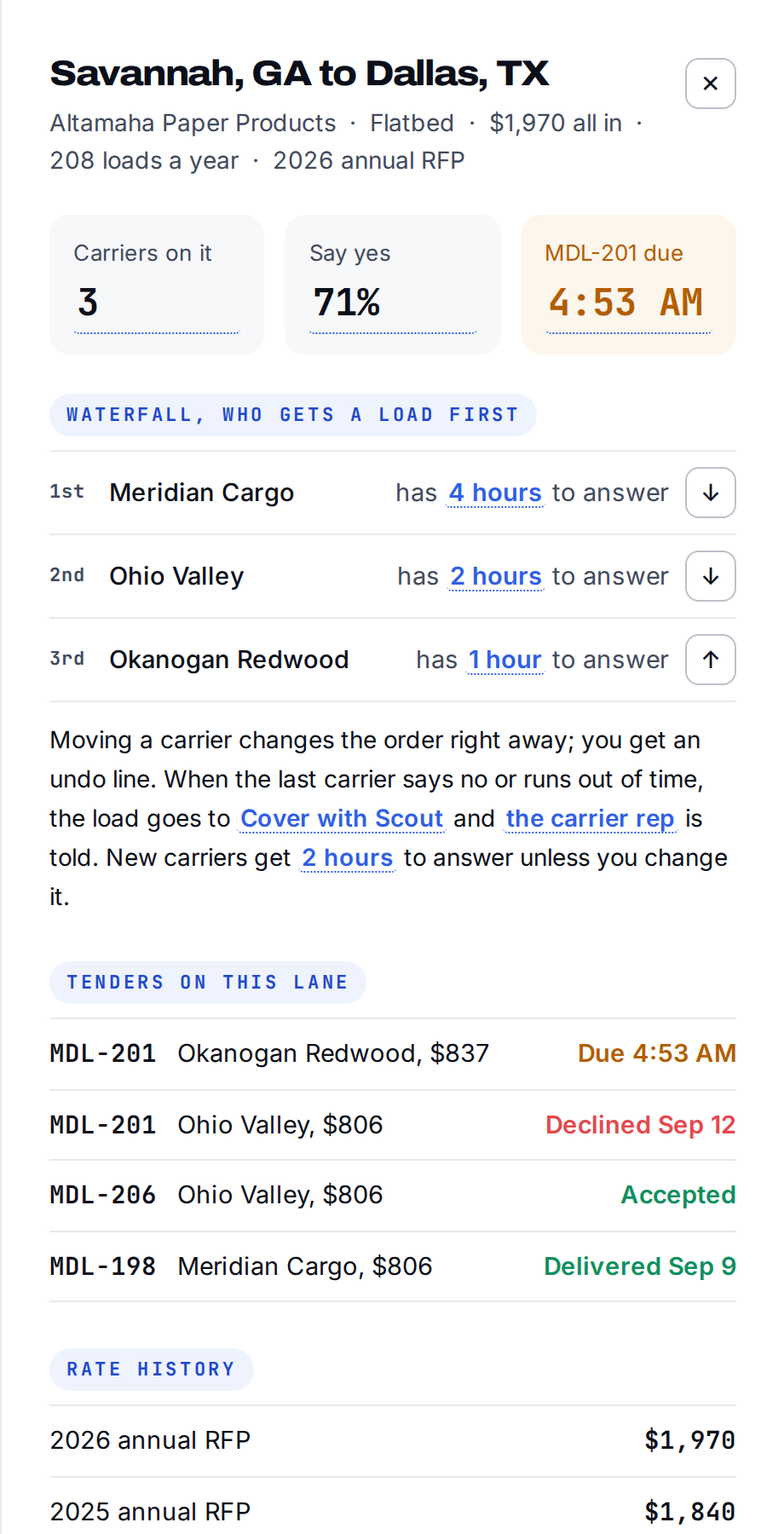
Your routing guide first. Then your own carriers who have run the lane. Then carriers sitting near the pickup, headhaul and backhaul. Then the boards. Reps can add anyone: paste a list of numbers, emails, or MCs and Scout works them too. Everyone clears the same vetting before first contact.
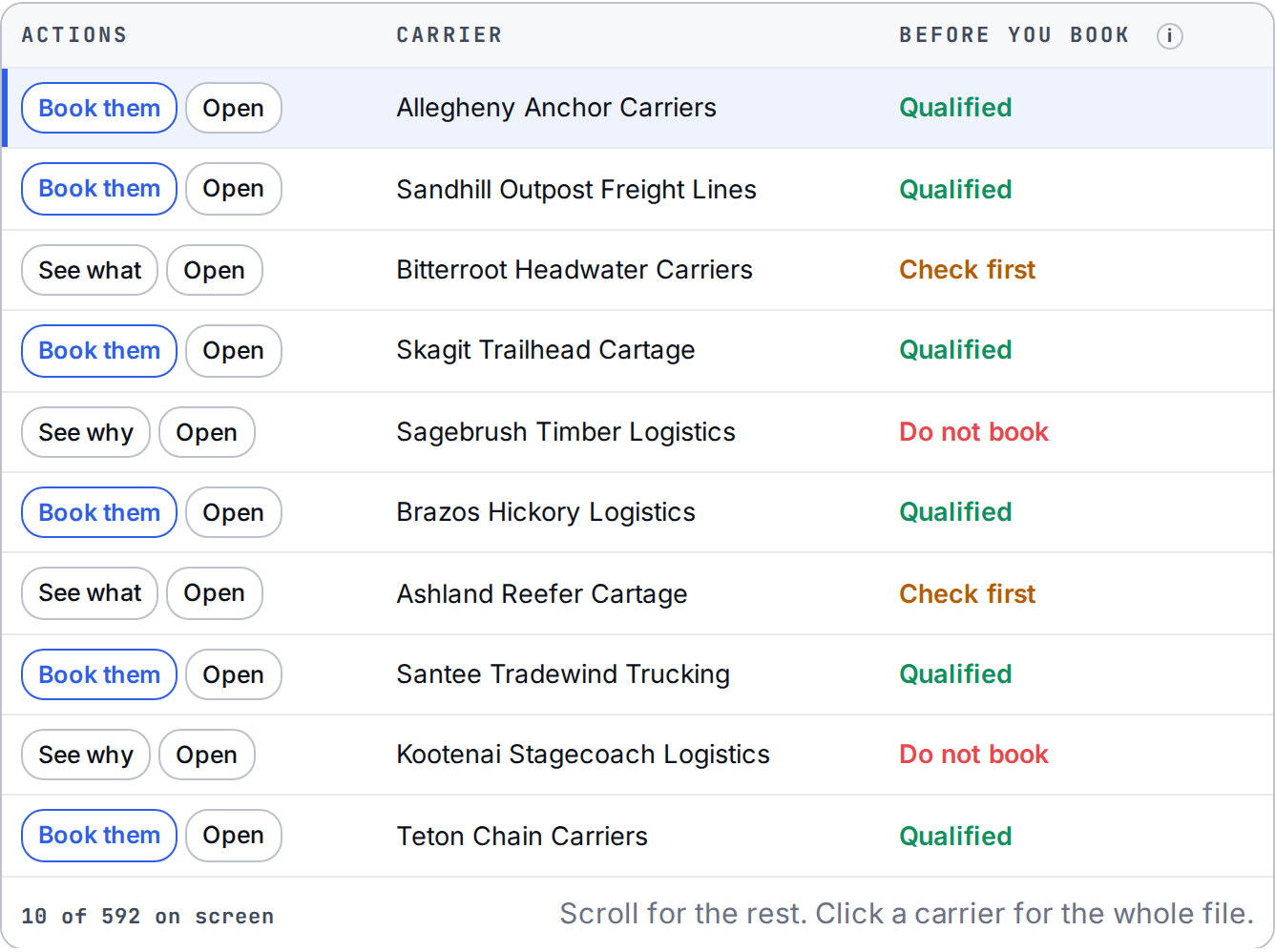
Authority, insurance, and history are checked before anyone gets a text or a call. A carrier that doesn't clear never gets a number. Dead threads close themselves. The rep only sees the threads that need judgment.
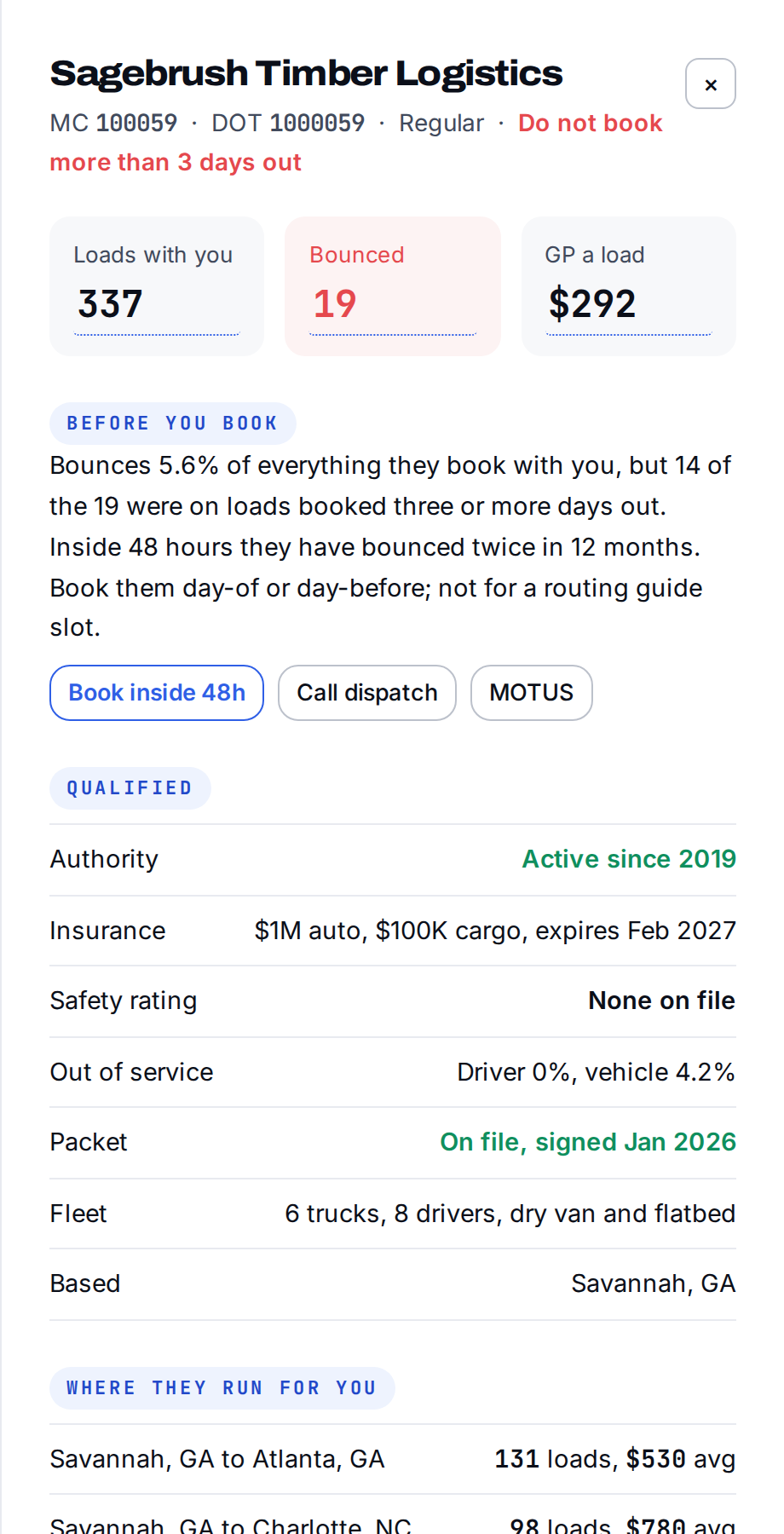
A carrier who's fine inside a day but bounces when he's booked three days out. Nobody on a floor is tracking that. Scout is, by lane, and it ranks him last on the load that fits the bad pattern, with the reason on the card.
A carrier bounces four hours before pickup. One button and Scout works every channel at once to re-cover it. Hot loads skip the line.
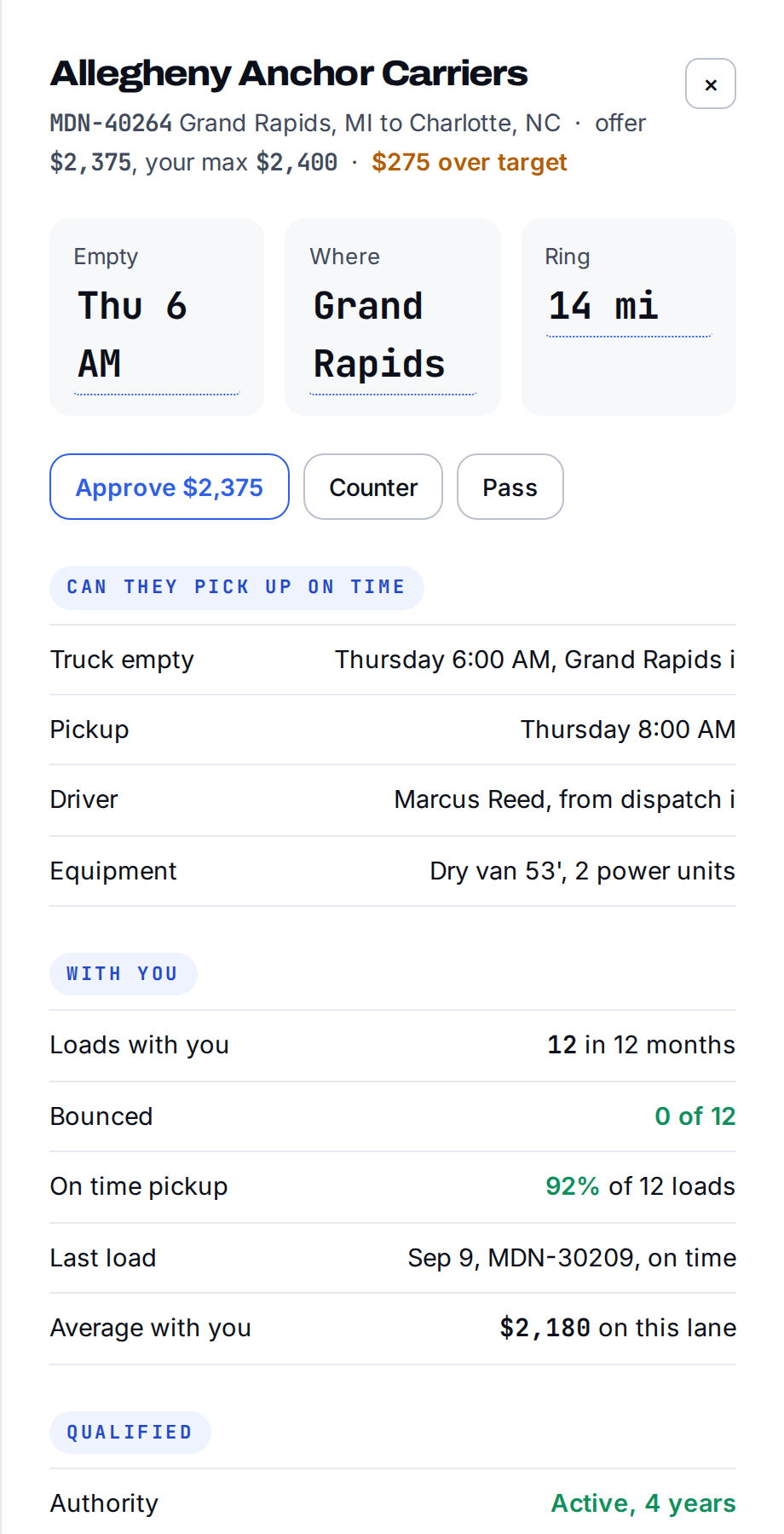
Scout brings the option: the carrier, the rate, where the truck is, when it's empty. You approve it. Never book a maybe.
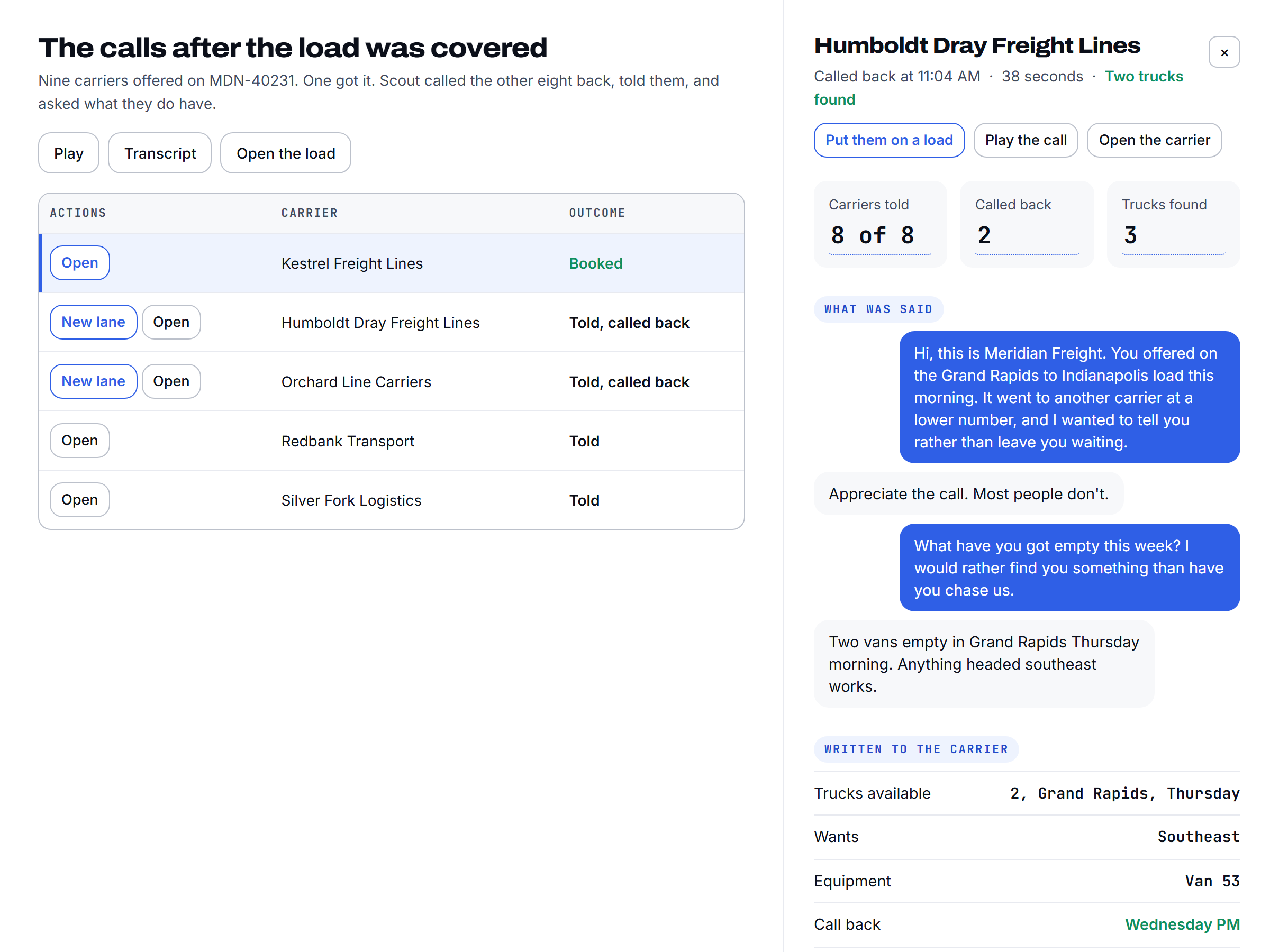
When a carrier doesn't get the load, Scout calls him back and tells him why. Then asks where he likes to run. He gets the next load that fits, first.
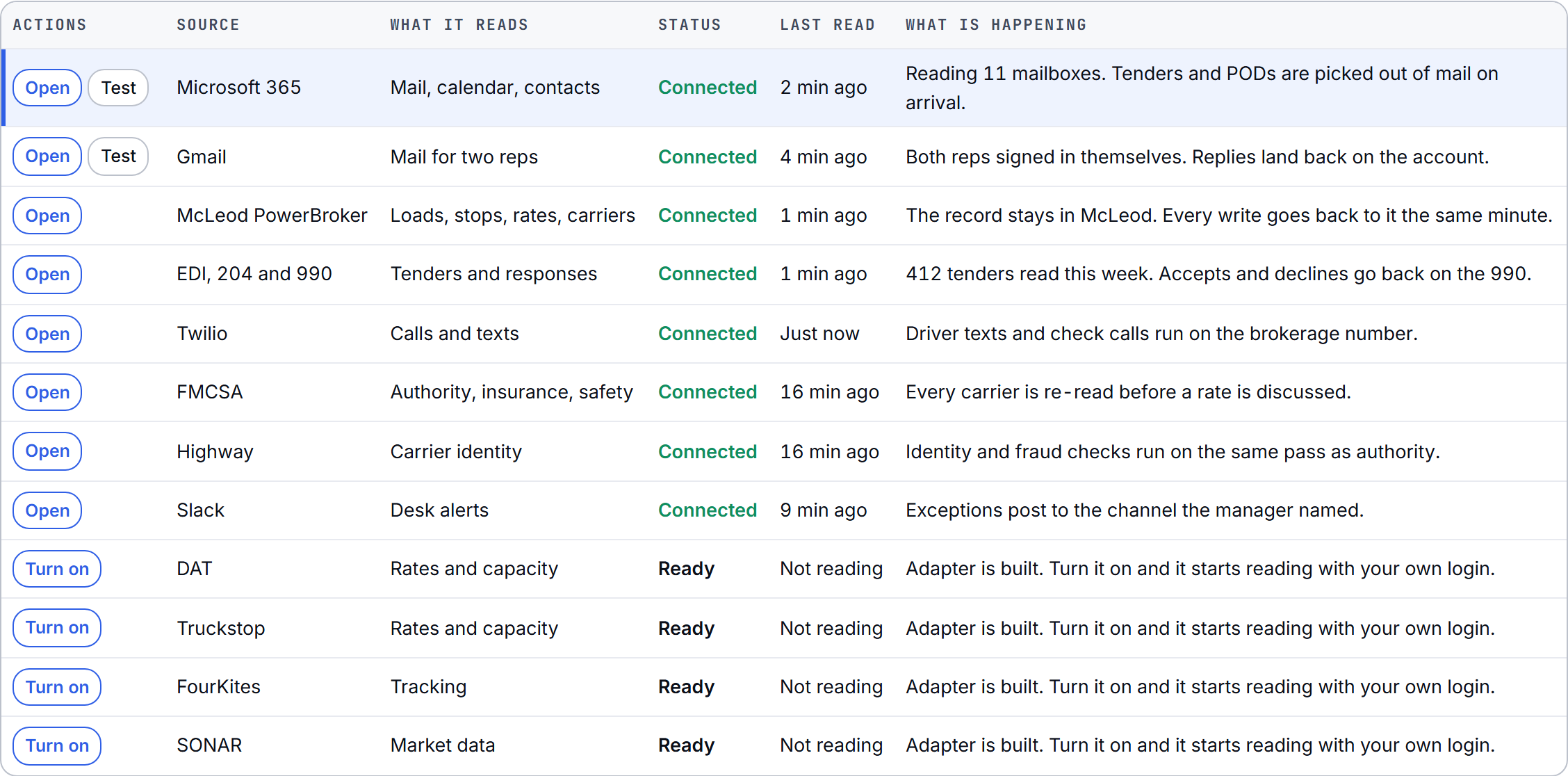
FreightScout does not replace DAT, Highway, or any tool your customer requires. The covered load is written back to your TMS. The TMS stays the record.
Go deeper: Carrier booking · vs Highway · vs Parade
No. It brings the truck. You approve it.
Never.
Yes. It says so.
One click and Scout re-covers it on every channel.