01 · The POD
The POD finds its load.
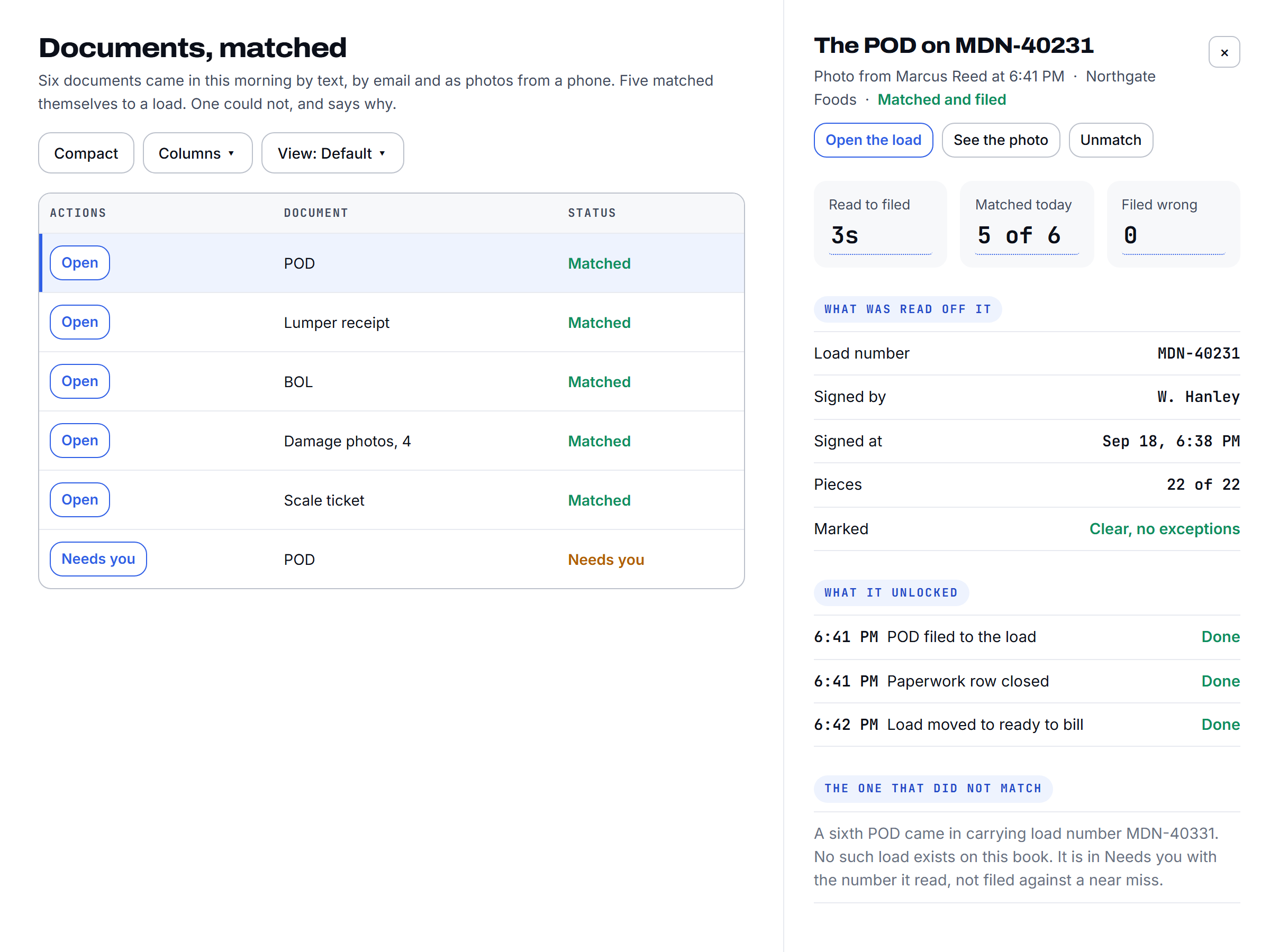
A POD comes in by text or email. Scout reads the number on the paper and matches it to the load.
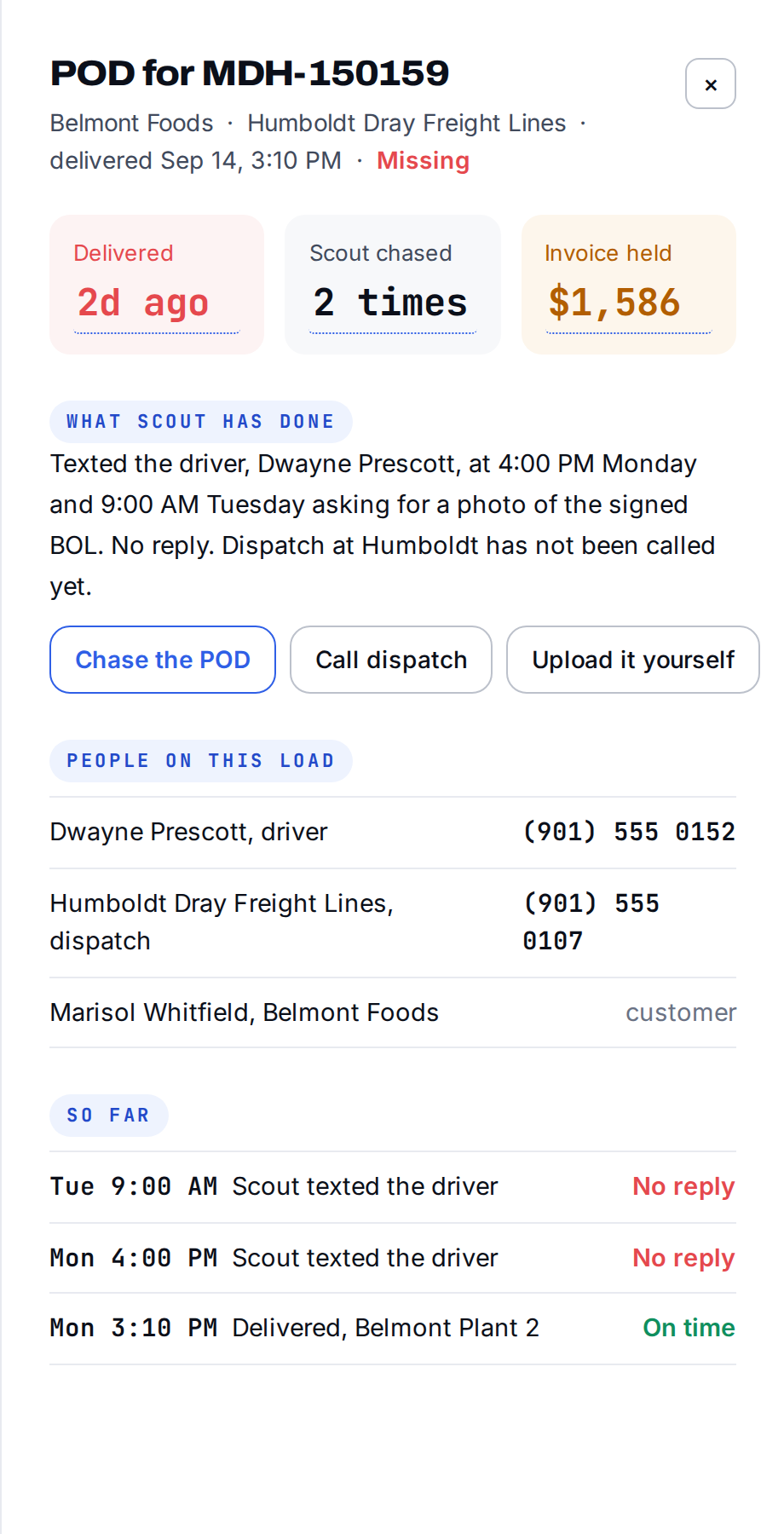
PODs matched to the load. The missing ones chased on a clock. The load closed out to billing without anyone digging through an inbox.
A POD comes in by text or email. Scout reads the number on the paper and matches it to the load.
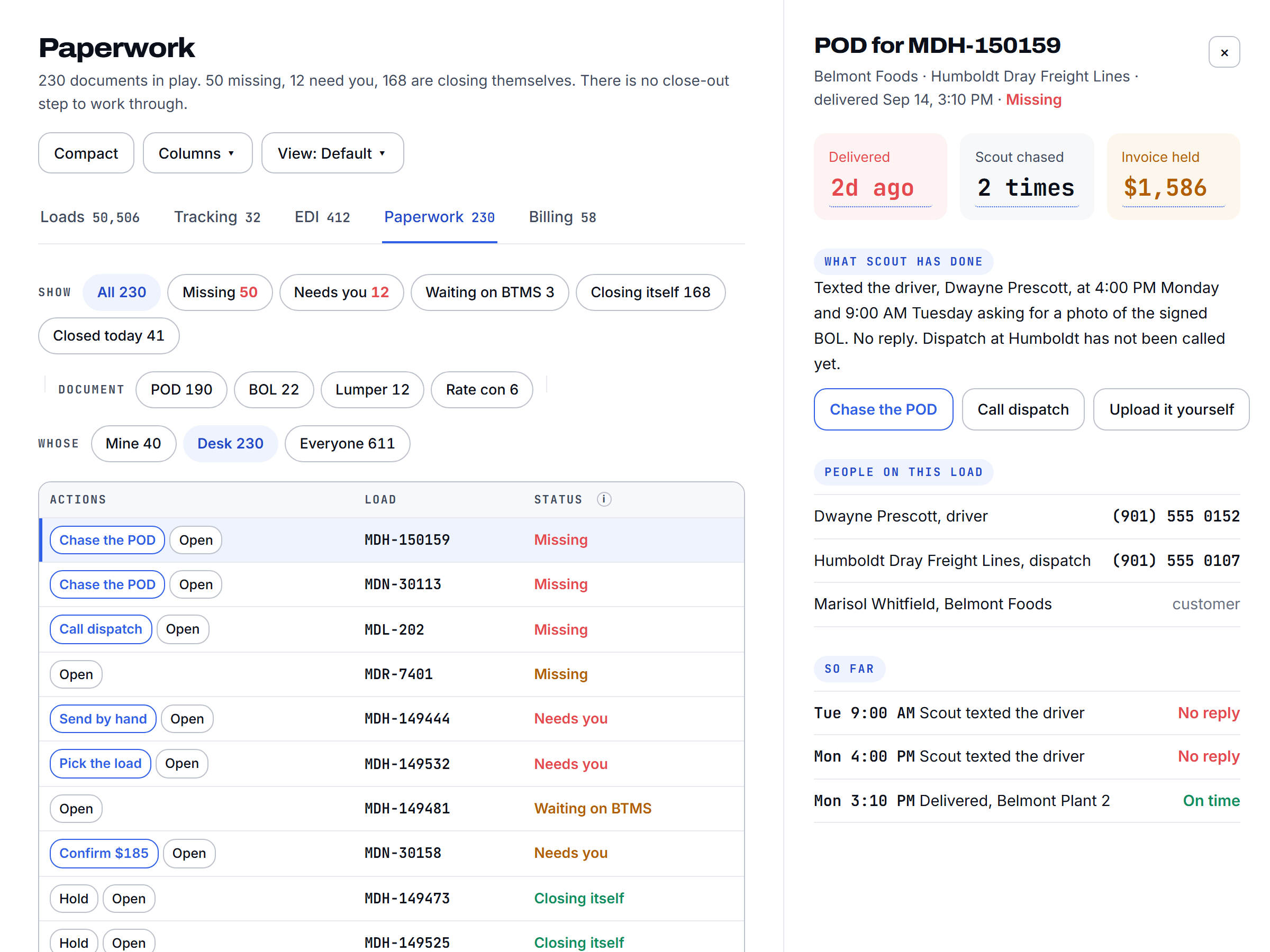
Text, then a call, then the dispatcher, on a clock, until it lands. Nobody has to keep the list.
The POD is not in. A text goes to the driver, then a call, then the dispatcher, on a clock. The POD lands, it is matched to the load, and the load closes out to billing. Nobody keeps the list.
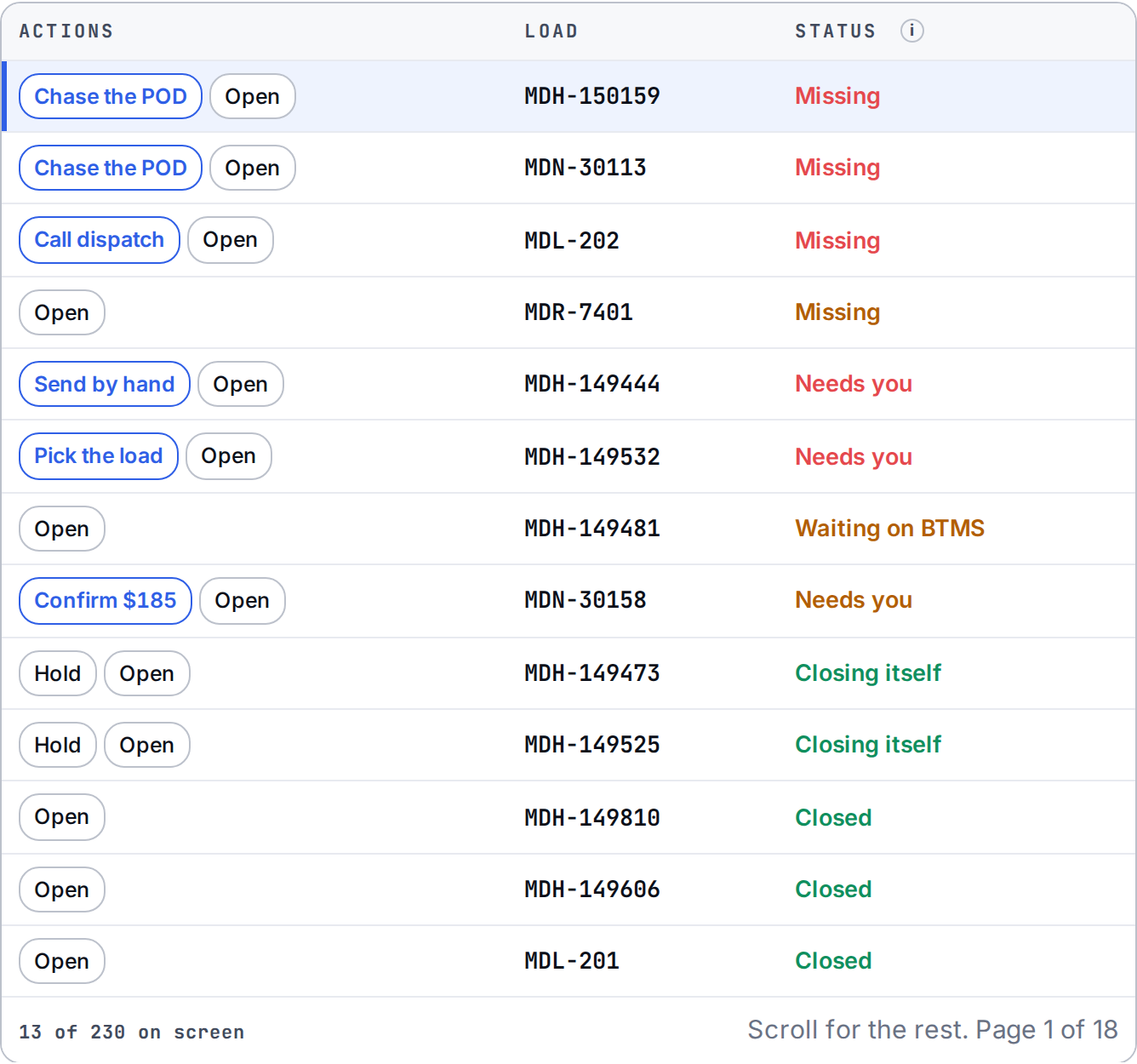
Lumper receipts, BOL photos, trailer pictures. Same rule as the POD: matched to the load by who sent it and the number on the paper. Anything that can't be matched goes to a person, never to a pile.
Once the POD lands, the detention submission is written for your rep: the POD, the in and out times, who signed. No dollar amount invented. Your rep sends it.
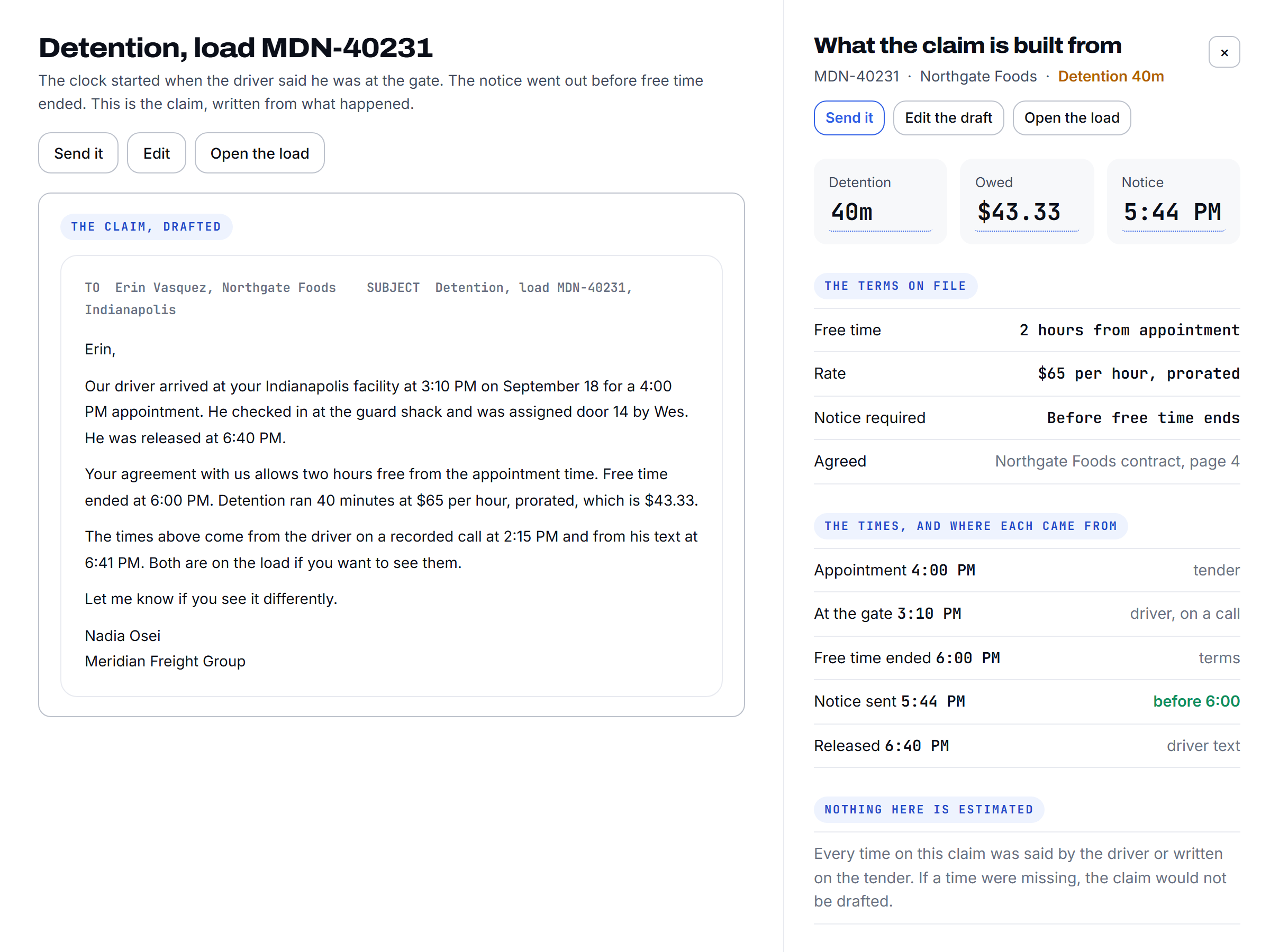
Detention and accessorials are only money if the paper backs them up. The times and the documents are on the load when billing opens it.
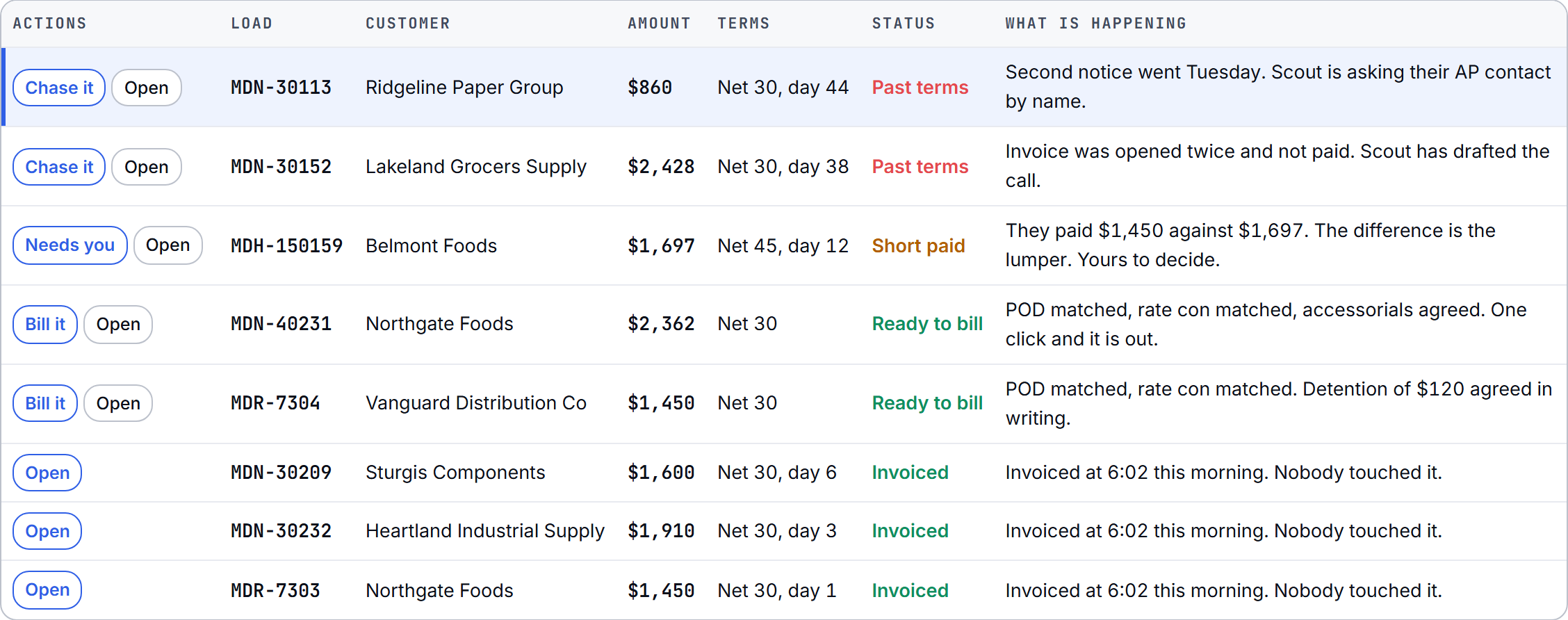
No. It gets the load ready for it.