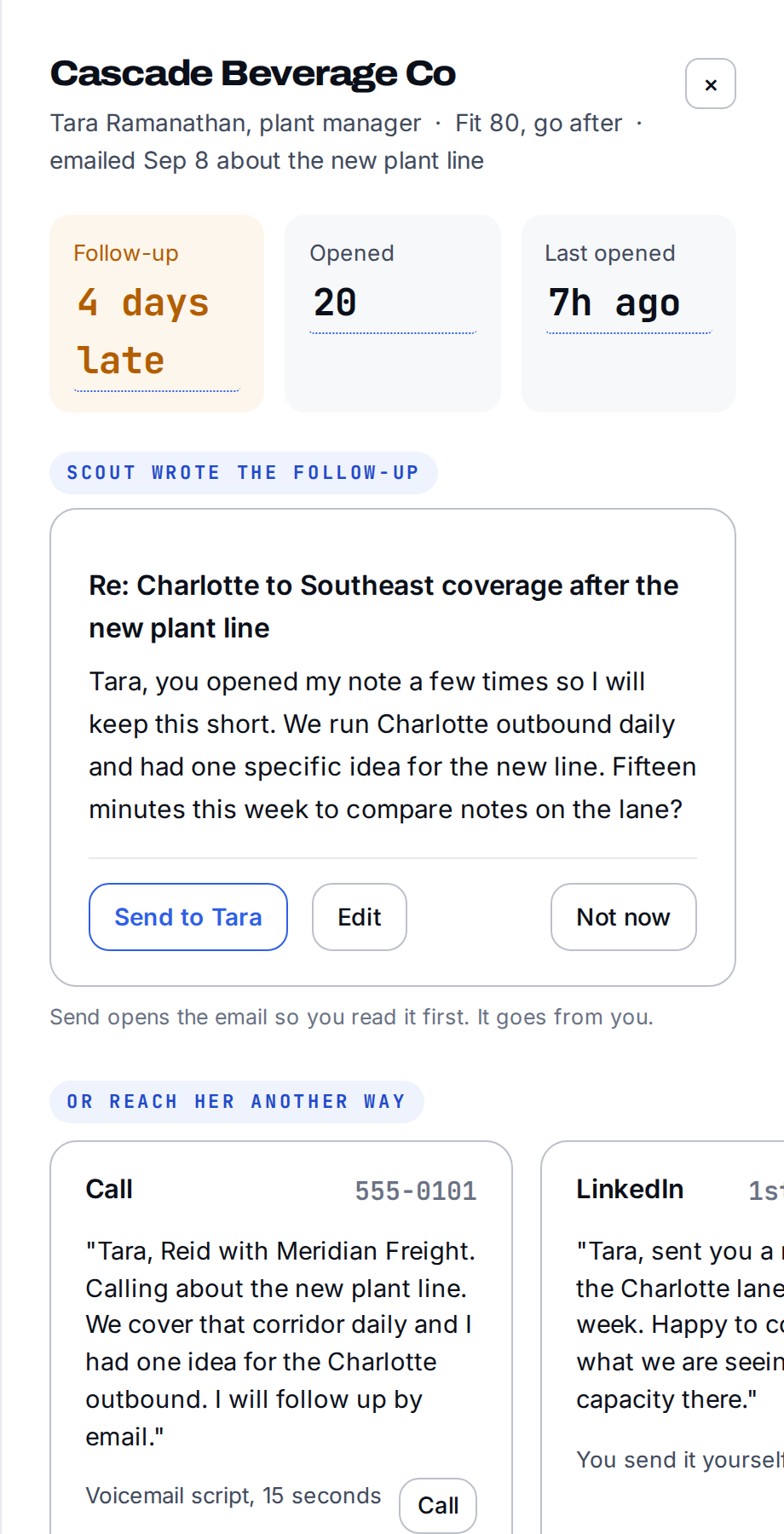
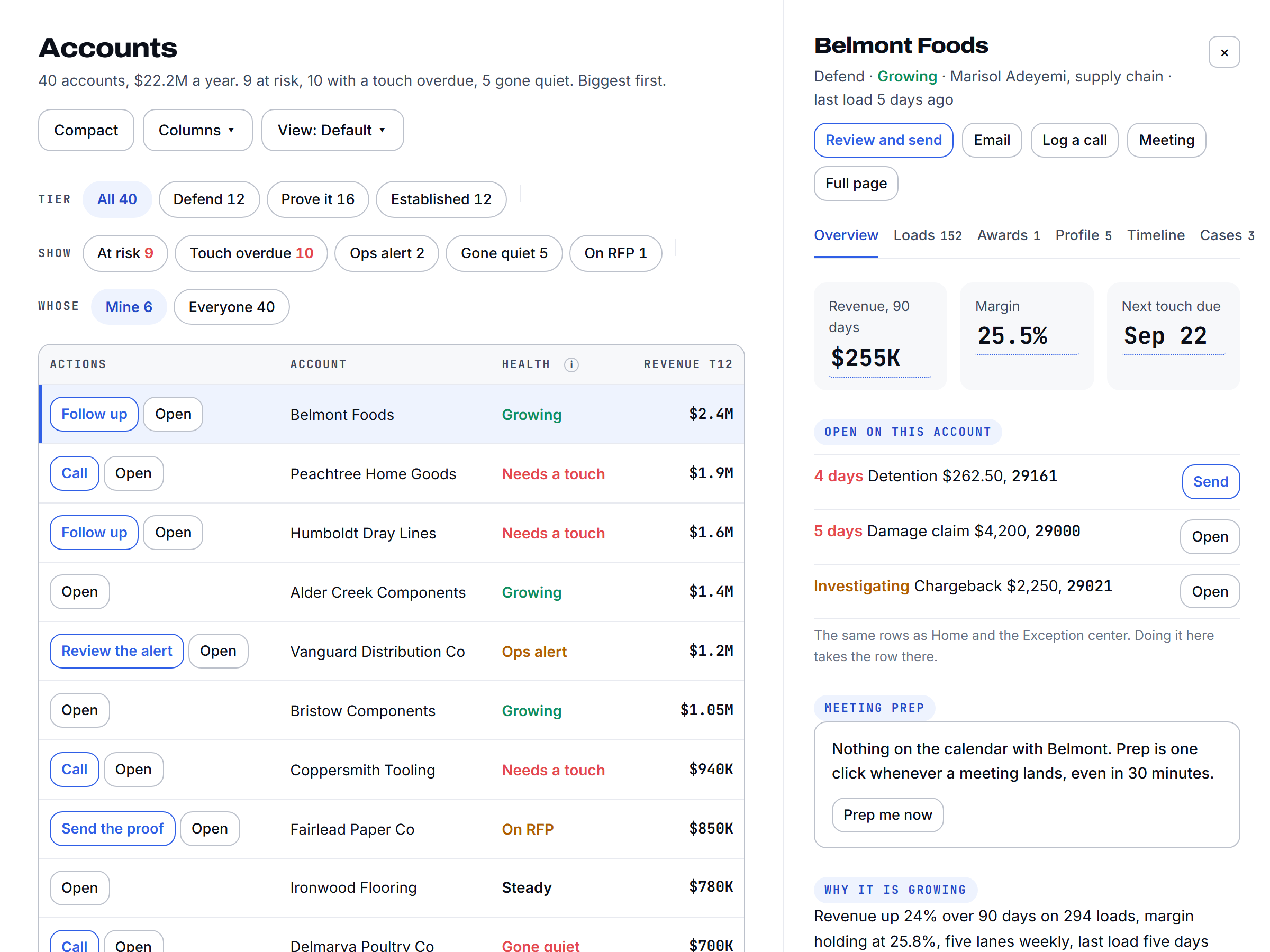
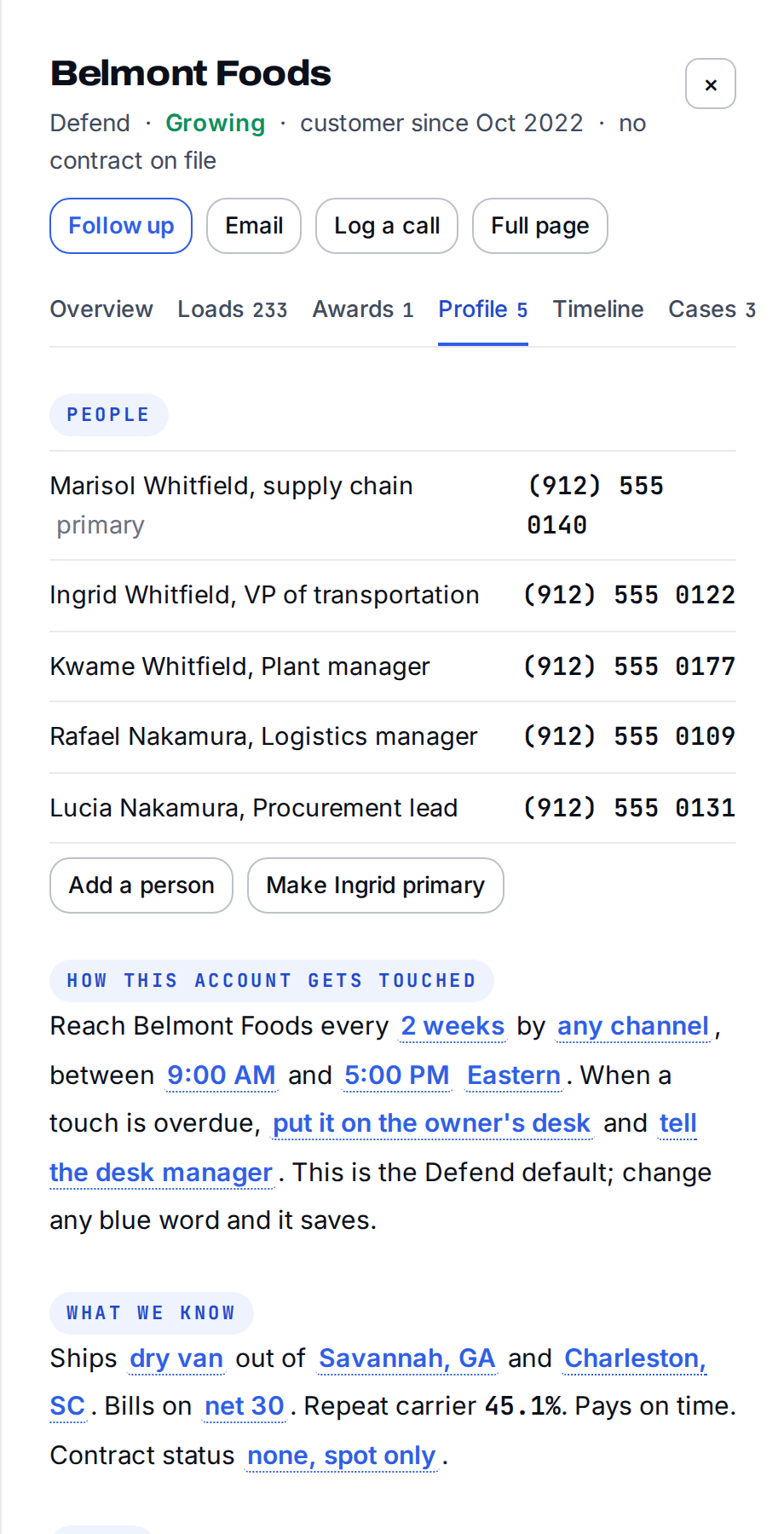
A shipper doesn't log in and cancel. It just quietly tenders you fewer loads. FreightScout watches what actually predicts a leaving customer, flags the at-risk shipper while you can still save the account, and drafts the save or win-back note to the right contact before the RFP goes out.


By the time an account "officially" leaves, by RFP or by goodbye email, the decision was made months ago, in the data. Software built for software deals sees a happy customer right up until the last load. FreightScout sees the drift the week it starts.
No single metric tells you an account is leaving. FreightScout fuses the ones that actually predict it: tender-volume collapse against the account's own baseline, comms going quiet, margin eroding, and slow-pay drift. All of it lands in a single weighted at-risk score you can rank the book by.
See it across the whole book
A flag is only useful if it comes with a move. FreightScout doesn't just tell you Cobalt is slipping. It drafts the save-the-account note to the right contact and sets the follow-up, so defending the book is a two-click motion, not a fire drill.

Recovery is the fourth beat of the revenue motion. Dormant and lapsed accounts stay on the board with a re-engage plan, because the cheapest new customer is the one you already had.
Yes. FreightScout watches tender volume against the account's own baseline, comms going quiet, margin erosion and slow-pay drift, and fuses them into one at-risk score. When an account slips, the save note's already drafted to the right contact, before the RFP goes out.